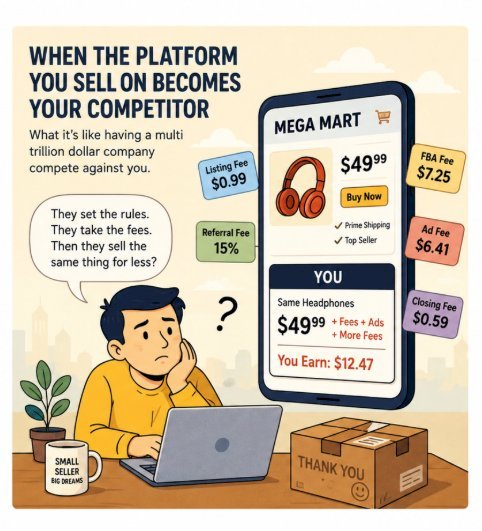
If you've ever watched a product you helped make popular suddenly show up as a cheaper "Amazon's Choice" version a few months later, you're not imagining it.
This isn't a one-off complaint. It's a documented pattern. A 2020 Wall Street Journal investigation, based on interviews with more than 20 former Amazon employees, found that the company used data from independent sellers to help develop and price its own competing private-label products — despite repeatedly telling Congress under oath that it didn't.
The consequences have been real, not just reputational:
- In 2022, Amazon reached a settlement with European Union regulators after an antitrust probe into exactly this issue. As part of it, Amazon agreed to stop using data from independent sellers' activity on its marketplace to develop or sell its own competing products.
- In September 2023, the FTC — joined by 17 state attorneys general — filed a sweeping antitrust lawsuit against Amazon, alleging the company used anticompetitive tactics including burying search results under recommendation widgets that favor Amazon's own products, and hiking seller fees while degrading the marketplace experience.
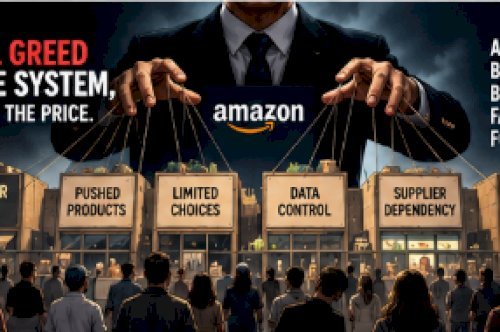
Here's the structural problem underneath all of it: when the same company is both the store and one of the sellers in that store, the seller's success can become a threat instead of a win. Your sales data isn't just information anymore — it's a map the platform can use to compete against you.
List99 doesn't have that conflict of interest, by design. We're a platform, not a competitor. We don't list our own products, and we never will. Your sales data is yours. When you succeed on List99, there's no in-house team quietly watching your numbers to decide what to launch next.
Want to see the real difference in what you actually keep? Try the Fee Comparison Calculator →
Facts referenced above are drawn from public reporting (Wall Street Journal, 2020), the European Commission's 2022 antitrust settlement with Amazon, and the FTC's publicly filed September 2023 antitrust complaint against Amazon.com. Amazon has disputed some of these claims; litigation regarding the FTC's complaint remains ongoing as of this writing.