The Cost of Existing Should Not Be Artificially Expensive
Human beings need remarkably ordinary things.
Food. Housing. Clothing. Transportation. Energy. Healthcare. Communication. Education. And increasingly, access to the digital systems through which modern society operates.
None of these things become free simply because people need them. Producing goods requires labor, resources, infrastructure, energy, knowledge and capital.
But there is an important question we rarely ask:
How much should it actually cost to be alive?
Not how much can someone be persuaded to pay.
Not how much can a dominant company charge.
Not how much debt a household can absorb.
Not what price produces the highest possible return.
What does it actually cost society to provide the things people need?
Those are very different questions.
And the growing distance between them may become one of the defining economic questions of the technological age.
Technology Was Supposed to Make Things Cheaper
Consider what technology has accomplished.
Machines allow one person to produce what once required dozens.
Software allows transactions to occur almost instantaneously.
Global logistics move products across continents with extraordinary efficiency.
Algorithms coordinate inventories containing millions of products.
Robotics increasingly performs physical labor.
Artificial intelligence can perform intellectual tasks that previously required hours or days of human effort.
The economic implication should be obvious:
The amount of human effort required to produce many goods and services is declining.
Historically, productivity was supposed to create abundance.
More output from less labor.
Lower costs.
Higher living standards.
More leisure.
Greater economic security.
But something peculiar happens when technological efficiency enters an economic system optimized primarily around maximizing financial extraction.
The technology becomes cheaper.
The process becomes cheaper.
The labor requirement becomes smaller.
Yet somehow ordinary existence remains expensive.
Sometimes it becomes even more expensive.
That deserves examination.
Price and Cost Are Not the Same Thing
We frequently use the words price and cost as though they mean the same thing.
They do not.
Cost asks what resources were required to produce something.
Price asks what someone must surrender to obtain it.
In a competitive market, those numbers should maintain some relationship. But market power can separate them.
A company does not necessarily charge what something costs to produce plus a reasonable return.
It may charge whatever customers can be made to tolerate.
That distinction becomes increasingly important as technology drives underlying production and coordination costs downward.
Because when production becomes dramatically more efficient but consumers receive little of that efficiency through lower prices or greater value, the productivity gain has gone somewhere.
Someone captured it.
There Is Nothing Wrong With Becoming Wealthy
This conversation can quickly deteriorate into an argument about whether wealthy people deserve their wealth.
That misses the point.
Innovation should be rewarded.
Risk should be rewarded.
Investment should be rewarded.
Building something millions of people voluntarily use can create enormous legitimate value.
Someone becoming extraordinarily wealthy is not, by itself, evidence that anyone has been exploited.
The relevant question is how that wealth was produced.
There is a meaningful difference between becoming wealthy because you created enormous new value and becoming wealthier because you acquired enough control over something people need that you could continuously extract more from their participation.
One expands abundance.
The other monetizes dependency.
Those should not be confused.
The Yacht Is Not the Problem
Someone owning a yacht does not automatically make another person poor.
Someone building a rocket does not inherently increase the price of groceries.
Private wealth can fund extraordinary experimentation, discovery and technological progress.
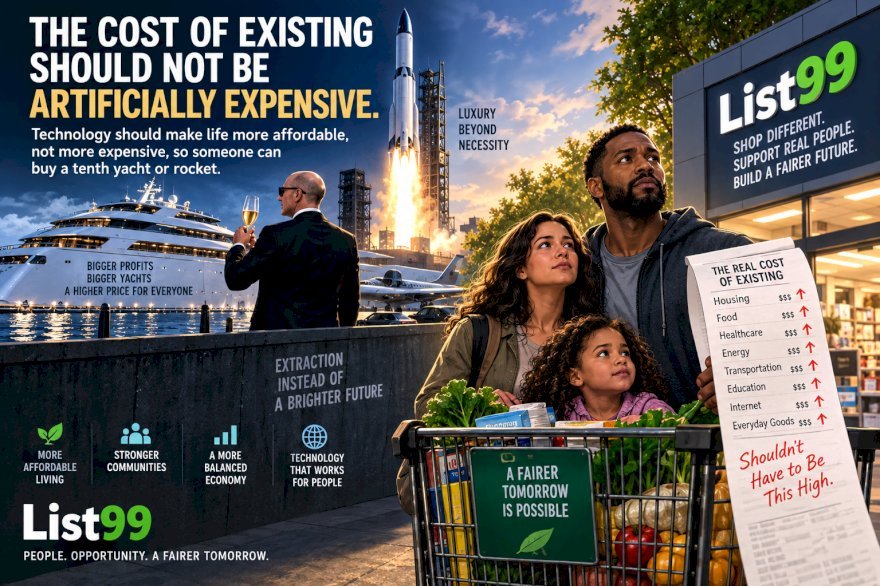
The yacht and the rocket are therefore not the economic problem.
They are useful symbols of a different question:
How much human necessity should be converted into private surplus before we begin questioning the mechanism producing that surplus?
If someone creates a revolutionary product and becomes enormously wealthy because people value it, wonderful.
Build the rocket.
Buy the yacht.
Build ten.
But if extraordinary wealth depends upon systematically inserting tollbooths between human beings and increasingly inexpensive goods, services or opportunities, society should examine the tollbooths.
The objection is not to wealth.
It is to unnecessary extraction.
Artificial Scarcity in an Age of Abundance
For most of human history, scarcity was physical.
There simply was not enough food.
Not enough energy.
Not enough productive capacity.
Not enough transportation.
Not enough information.
Technology has begun changing many of those constraints.
Yet our economic systems remain remarkably capable of producing financial scarcity even as physical scarcity declines.
Housing can exist while people cannot afford housing.
Food can exist while people cannot afford food.
Medicine can exist while patients cannot afford medicine.
Productivity can rise while workers struggle to afford the products their economy produces.
Digital goods can sometimes be reproduced at negligible marginal cost while access remains expensive.
This does not mean every high price results from greed. Supply chains are complicated. Regulation has costs. Land can be scarce. Labor deserves compensation. Research requires investment. Infrastructure requires maintenance.
But those realities should not prevent us from asking:
Which costs are necessary, and which costs exist because somebody has the power to impose them?
Profit Is a Tool, Not a Law of Nature
Profit performs an important economic function.
It creates incentives.
It rewards successful allocation of resources.
It attracts investment.
It allows businesses to survive, expand and innovate.
But maximizing profit is not a physical law.
Gravity does not require a 30 percent margin.
Thermodynamics does not demand transaction fees.
The universe did not invent subscriptions.
Human beings designed these systems.
That means human beings are allowed to question whether those systems continue serving us.
A functioning market should reward companies for making life better, easier and less expensive.
When businesses instead discover that making necessary participation more expensive produces greater financial returns, market incentives can become detached from the interests of the people the market supposedly serves.
Automation Makes This Question Urgent
Artificial intelligence and robotics make this conversation increasingly unavoidable.
Imagine an economy in which automation reduces the labor required to produce a particular good by 80 percent.
What should happen?
One possibility is extraordinary.
The good becomes dramatically cheaper.
People need to work less to afford it.
Society receives the productivity dividend.
Another possibility is very different.
The company eliminates much of the labor.
Production costs collapse.
Prices remain roughly unchanged.
The productivity dividend flows primarily to the owners of automated capital.
Consumers continue working to afford the same goods — except there may now be fewer jobs through which they can earn the money required to buy them.
That system eventually encounters a mathematical problem:
We cannot indefinitely remove human beings from production while requiring participation in production as the principal condition for accessing consumption.
Automation therefore forces us to decide who technological progress is actually for.
Measure Progress by the Cost of Existence
There is another way to measure economic progress.
Instead of asking only:
How large is GDP?
How high is the stock market?
How profitable are corporations?
How much wealth has been created?
We could also ask:
How many hours of an ordinary person's life are required to obtain the necessities of existence?
How many hours for housing?
How many for food?
How many for transportation?
How many for healthcare?
How many for energy?
How many simply to remain connected to society?
Imagine reducing that number generation after generation.
That would represent something profound.
Technology would not merely make society wealthier on paper.
It would make human existence materially easier.
This Is Part of the Idea Behind List99
List99 begins with a simple premise:
Technology should reduce the cost of participating in an economy.
If software makes it cheaper to connect buyers and sellers, some of that efficiency should reach buyers and sellers.
If automation reduces administrative overhead, some of that benefit should reach the people using the marketplace.
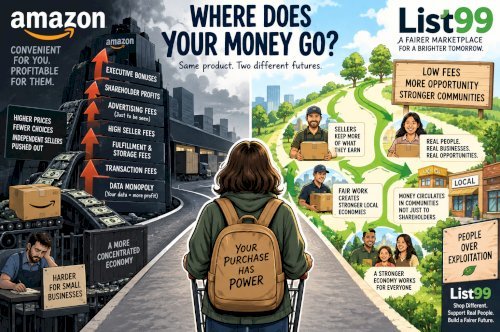
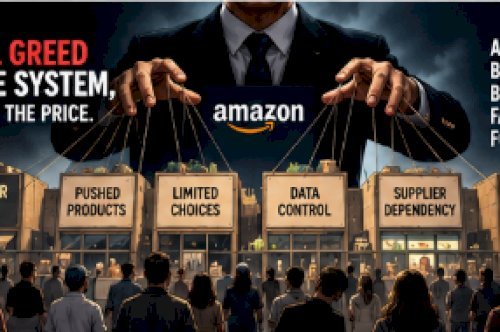
If scale reduces transaction costs, scale should not merely become another opportunity to extract larger rents from people who have become dependent upon the platform.
A marketplace obviously needs revenue.
Infrastructure costs money.
Employees should be paid.
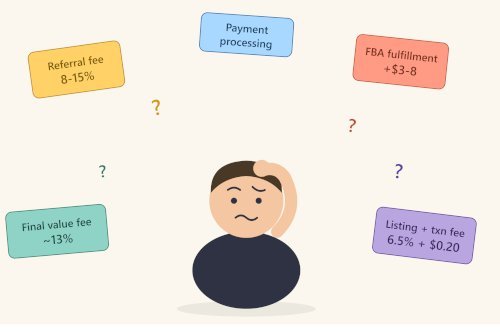
Payment processing costs money.
Fraud costs money.
Businesses need reserves and capital.
Innovation requires investment.
Sustainability matters.
But after those legitimate costs comes a philosophical choice.
Do you ask:
How much more can we take?
Or do you ask:
How much less can this cost?
Those questions can produce radically different companies.
Eventually, they can produce radically different economies.
Abundance Should Feel Like Abundance
Humanity is approaching technologies our ancestors could barely have imagined.
Machines that reason.
Robots that work.
Factories that increasingly operate themselves.
Nearly instantaneous global communication.
Extraordinary agricultural productivity.
Increasingly automated transportation.
If those technologies mature while ordinary people must work harder merely to afford existence, something has gone profoundly wrong with the distribution of their benefits.
Progress should eventually feel like progress.
Efficiency should eventually feel like efficiency.
Abundance should eventually feel like abundance.
The ultimate achievement of technology should not be creating the world's next trillionaire while everyone else receives another bill.
It should be steadily reducing how much of a human life must be surrendered simply to remain alive.
There will still be ambition.
There will still be luxury.
There will still be entrepreneurs, investors, companies and fortunes.
There can still be yachts.
There can still be rockets.
But perhaps the greatest measure of an advanced economy will not be how spectacularly its richest citizens can live.
Perhaps it will be how little economic suffering is required for everyone else simply to exist.
Slug: the-cost-of-existing-should-not-be-artificially-expensive
Summary: Technology should make life more affordable, not preserve unnecessary costs simply because powerful intermediaries can extract more from human necessity. This article asks whether technological abundance should reduce the cost of existence rather than primarily finance ever-greater concentrations of wealth.
Tags: Economic Fairness, Cost of Living, Automation, Wealth Inequality, Technology, Abundance, List99
Meta keywords: cost of living, artificial scarcity, automation, productivity, economic extraction, wealth inequality, yachts, rockets, affordable living, List99